
Techverce Clone Scripts: Fastest Route to Launch a Profitable Business
29 Dec, 2025


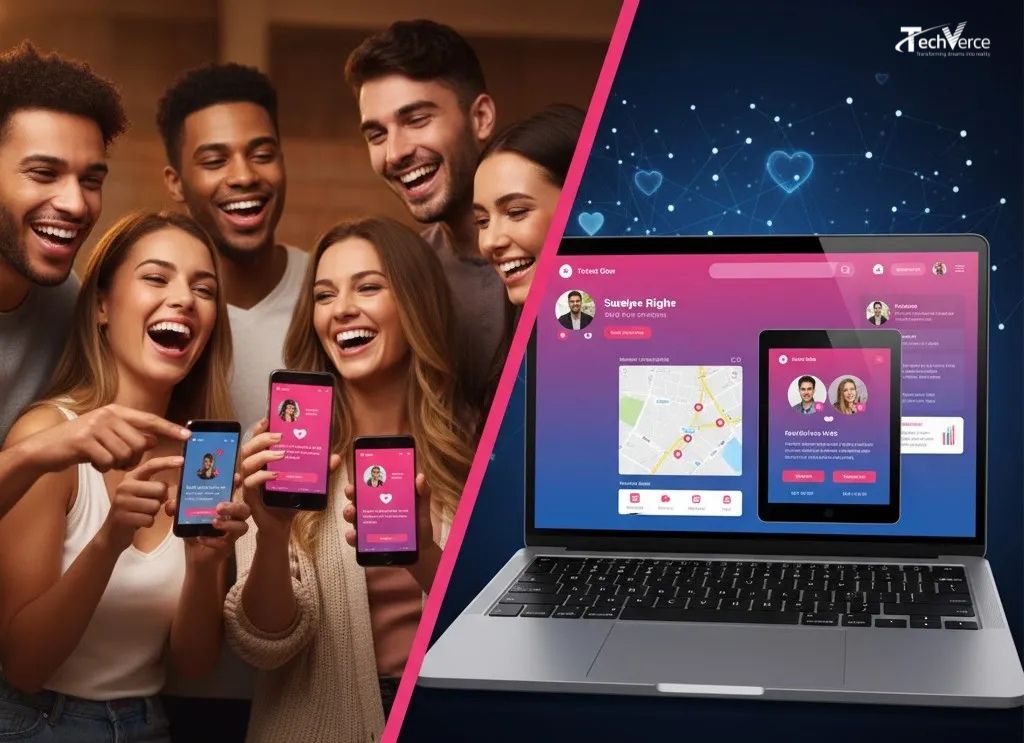
Looking to launch a top-tier dating platform in 2026? Discover how a dating app clone script can help you build the next “Tinder or Bumble”. This complete guide covers everything — from selecting the best dating app clone script to implementing key features like swiping, matching algorithm, chat functionality, geo-location, monetisation, user safety, and rapid market launch. With the dating app industry booming and ready-to-use clone solutions available, you can fast-track your startup, reduce development cost, and focus on growth. Whether you’re an entrepreneur or an IT company, this article gives you actionable insights to succeed in the online dating space in 2026.
In an era where digital connection matters more than ever, the online dating market continues to expand. Entrepreneurs and IT firms alike are recognising the opportunity: with the right solution, you can enter this high-growth space without reinventing the wheel. In this article, we explore how leveraging a dating app clone script enables you to build a platform akin to Tinder or Bumble, fast, efficiently and competitively in 2026.
The online dating market is projected to grow significantly in the coming years. According to one study, by 2029 the number of users is expected to reach 462 million, with annual growth continuing.
With market momentum shifting toward mobile-first social interactions, launching a dating app now means you can ride the wave rather than playing catch-up later.
Also, with clone scripts available for popular platforms, the development time, cost and risk are reduced. For instance, a “Tinder clone script” already has core features like profile creation, swiping mechanism, messaging, location-based matching and monetisation built-in.
Therefore, your focus shifts from building from scratch to differentiating your brand, refining user experience and marketing effectively.
A dating app clone script is a ready-made code-base and application framework that replicates the core functionality of an existing successful dating app (such as Tinder or Bumble). It offers a head-start: you get the backend, front-end, essential modules and admin panel so you can customise and launch quickly.
This means you save on time and cost, and you can invest more in branding, user acquisition and unique features.
Key benefits include:
Faster time to market
Proven UX/feature foundation
Lower development cost
Customisation flexibility
Built-in monetisation modules
However, success is not automatic: you must customise, optimise for your target audience, ensure security, implement strong matching logic and market wisely.
When building a clone of Tinder or Bumble, you’ll want to ensure the app offers features that users expect — and that will help you stand out. Below is a breakdown of essential features:
Smooth sign-up (email, phone, social login) and quick profile creation (photo, bio, interests, preferences). The easier the onboarding, the lower your drop-off.
The signature “swipe right or left” interaction (or similar) is now expected. When mutual interest is confirmed, a match happens and chat opens. Clone scripts regularly include this.
Location-based matching improves relevance and meeting chances. Users expect to find matches nearby.
Once a match happens, users want real-time messaging, and increasingly voice or video calling. This enhances engagement.
Beyond simple swiping, advanced apps now use algorithmic matching (based on interests, behaviour, preferences, location). To stand out in 2026 you’ll want this.
A robust revenue model is essential. Options: freemium model, subscriptions, in-app purchases (boosts, super likes), ads. Clone scripts often include subscription modules.
You need an admin dashboard to monitor metrics (users, matches, revenue), manage content and moderate effectively. A ready script often includes this.
Dating platforms carry sensitive user-data and matching logic. You will need robust authentication, verification, reporting/blocking, encryption and content moderation to build trust.
Even if using a clone script, you must customise UI/UX, brand colours, unique features, and add differentiators like local language support, event-based matching, niche-vertical dating etc.
Here is a structured roadmap to turn your idea into a live dating platform in 2026:
Analyse your target region, demographics, pain-points and competitor apps. Do you want to focus on general dating, niche (e.g., professionals, seniors), or regional/local market? Understanding the niche helps you tailor the clone script.
Select a reputable dating app clone script provider. Evaluate: features, scalability, code quality, platform (iOS/Android/web), licensing, customisation ability. Example sources: Tinder clone script providers.
Apply your brand, integrate unique UI/UX, add or remove features according to your niche. Localise language, culture, pricing. Ensure the matching algorithm aligns with your value-proposition (serious relationships vs casual dating).
Decide your revenue streams: subscription tiers (free/basic/premium), in-app purchases (boost, super-like), ads, affiliate partnerships. Ensure payment integration (wallet, cards, UPI etc) especially if you target markets like India.
Perform rigorous testing: device compatibility, load testing, security audits (data protection, encryption, privacy compliance). Also create moderation workflows to ensure user safety and trust. Then launch a minimum viable version (MVP) to gather early feedback.
Once live, your real challenge begins: user acquisition, retention, growth. Utilise SEO (your website/blog), social media marketing, influencer partnerships, app store optimisation (ASO), referral programmes and paid acquisition campaigns. Encourage early adopters to invite friends.
Use analytics from your admin panel to measure key metrics: user growth, matches per user, churn rate, subscription conversion, lifetime value. Regularly iterate features, UI, marketing based on data.
Even with a solid clone script, there are challenges in running a dating app. Here’s how to address them:
If users receive irrelevant matches or low quality prospects, they abandon quickly. To mitigate: improve algorithm, encourage profile completion, implement prompts, use behavioural data to refine matches.
Users expect safe spaces. Any scandal or breach can kill your brand. Implement identity verification, photo verification, moderation, spam/fraud detection, privacy controls. Build trust and communicate your safety commitments clearly.
Dating is crowded. To differentiate: choose a niche (vertical dating, localised markets), offer exclusive features (video events, live speed-dating, interest-based matching), excellent UX, local language support.
Aggressive monetisation can drive users away. Use balanced freemium models, reward early users, give value before asking for payment. Monitor conversion carefully.
Dating apps may have legal/regulatory scrutiny (data protection, age verification, local laws). Ensure you comply with privacy laws (GDPR if targeting EU, or equivalent in India), age restrictions, moderation policies.
For your company, Techverce, offering clone products, choosing a dating app clone script has multiple advantages:
Cost-effective development: You skip building core features from scratch, reducing time and expense.
Faster time-to-market: With pre-built modules, you can launch quicker, capturing market opportunity in 2026.
Proven functionality: Clone scripts have tested workflows (swipe, match, chat), decreasing risk of basic design flaws.
Customisation & scalability: You can tailor the script to your customer’s branding, add niche modules, scale as user-base grows.
Focus on value-add: Your time can shift from building basics to enhancing UX, unique features, marketing and growth.
Here are some focused marketing strategies tailored for a dating app launch:
Search Engine Optimisation (SEO) & Content Marketing
Write blog posts, guides and articles that target keywords like “dating app clone script”, “how to launch dating app 2026”, “Tinder clone benefits”, etc. This drives organic traffic and establishes your brand as a thought‐leader.
App Store Optimisation (ASO)
Optimise your App Store listing with the right keywords (dating, find match, swipe app, love meet), attractive screenshots, ratings and reviews.
Referral & Viral Mechanism
Encourage users to invite friends (offer a free boost feature in exchange) – dating apps thrive on network effects.
Influencer & Social Media Campaigns
Leverage social influencers, micro-influencers in niche communities (singles, millennials) to promote your app. Use short videos, user stories, success stories.
Localisation & Language Targeting
In markets like India, localisation in multiple languages, cultural adaptation and regional marketing give a strong advantage.
Partnerships & Events
Collaborate with local events, singles meet-ups, brand tie-ups to promote offline to online synergy. Offer in-app event hosting or “match for events” features.
Retention & Engagement
Use push notifications, gamification (daily login bonuses, streaks), user onboarding tips, profile suggestions to keep users active. Retention is key.
When building your dating app now and planning for growth, keep an eye on these emerging trends:
AI-powered matching: Algorithms will increasingly leverage behavioural data, preferences and machine learning to deliver high-quality matches.
Video-first dating: With users increasingly comfortable with video, live streams, video profiles and virtual speed-dating will grow.
Niche vertical communities: Dating apps focused on specific niches (professionals, faith-based, senior singles) will gain traction.
Augmented Reality / Virtual Reality: While still early, AR/VR “virtual dates” may become mainstream for remote users.
Privacy & Safety as differentiator: Apps that emphasise robust safety, verification and transparency will win user trust.
Hybrid models – social + dating: Adding elements of friendship, networking or event-match components (think Bumble’s friend or networking modes) expands utility.