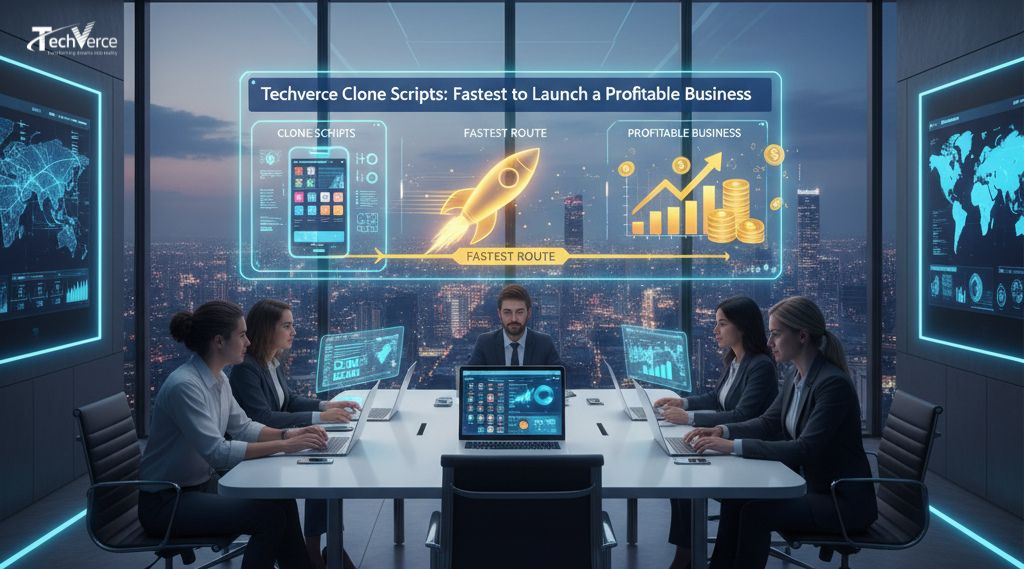
Techverce Clone Scripts: Fastest Route to Launch a Profitable Business
29 Dec, 2025


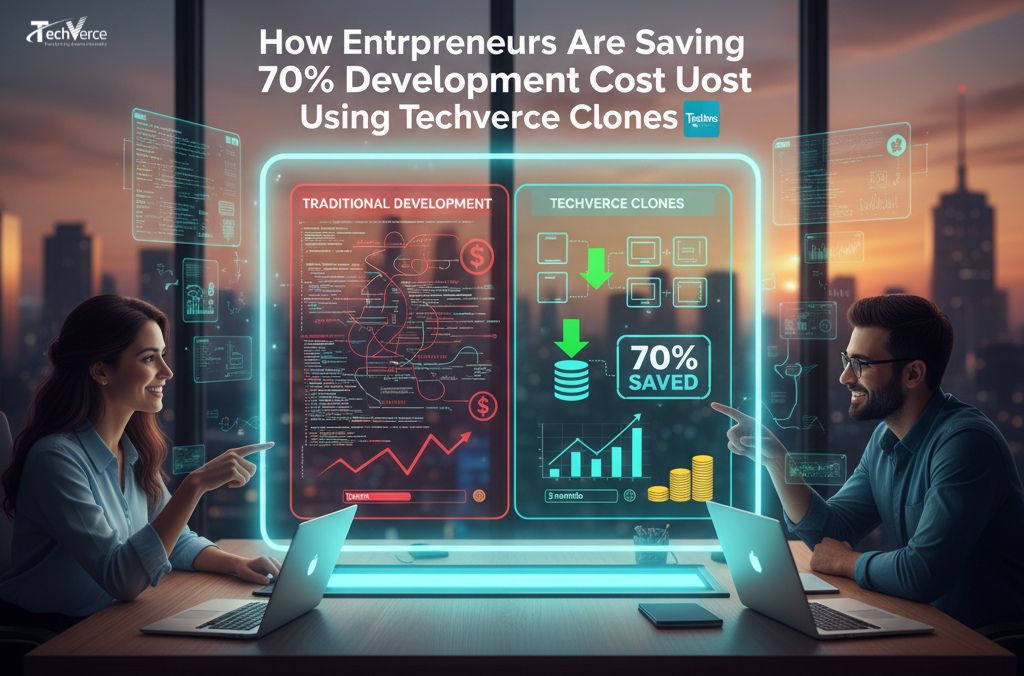
Discover how entrepreneurs are saving up to 70 % in development costs by leveraging clone script solutions from Techverce. In this detailed article, we explore how clone apps—pre-built, ready-to-deploy software models—enable startups and scale-ups to launch quickly, reduce engineering overhead, and enter the market faster. Learn how Techverce’s clone products cut out months of custom development, deliver proven business models, and offer powerful customization while controlling budget and time-to-market. If you’re looking for cost-effective mobile apps and web platforms like Uber, Amazon, or Airbnb clones, this piece shows exactly how savings are achieved and how you can apply them to your venture. Boost your business with Techverce clones and save 70 % on development costs while retaining flexibility, scalability and brand uniqueness
In the fast-moving digital era, launching a business platform or mobile application from scratch can be both time-consuming and expensive. Traditional development pathways involve long timelines, sizable engineering teams, architecture planning, testing, debugging, iterations—and often large budgets. However, by using clone script solutions—ready-made platforms replicating proven models—entrepreneurs are rewriting this narrative. At Techverce we specialise in clone products that allow you to launch your business quickly, reduce costs, and gain a competitive edge. In this article we’ll explore how entrepreneurs are saving up to 70 % of development cost via Techverce clones, the reasons behind such savings, practical steps, case study perspectives, and how you can replicate the strategy.
When you decide to build an app or web platform from scratch, the typical process includes:
Requirements gathering, business model definition, UI/UX design
Front-end and back-end architecture development, database setup, APIs
Mobile apps (iOS, Android) or responsive web, integration of payment gateways, notifications, admin panels
QA and testing, iteration, bug-fixing, performance tuning
Deployment, maintenance, update cycles
This traditional route demands significant resources: a team of developers, designers, testers, DevOps, and long timeline—often months or even over a year for larger applications.
By contrast, employing a clone solution from Techverce changes the equation:
A ready-made script or template embodies a proven business model (for example, ride-hailing, food-delivery, e-commerce)
Core features are pre-coded, saving on development of foundational functionality
Customisation focuses on branding, minor feature modifications rather than building everything from ground up
Time-to-market shortens dramatically. According to multiple sources, clone scripts significantly reduce both development time and cost.
With shorter timelines and less engineering effort, you save on labour costs, project overheads and time-related expense.
Let us break down the key cost-drivers in development and how clone scripts help reduce them:
With a clone product, the majority of core modules—user registration, login, dashboards, basic features—are already implemented. This avoids the full build of modules from scratch. As one article noted: “The most significant advantage of using clone apps is the time and cost savings they offer.”
Less engineering time means fewer developer hours, less project management overhead, fewer iterations.
A delayed launch means longer burn on costs (developers, infrastructure, marketing before revenue). Clone scripts accelerate launch. As noted: “Clone scripts … shorten time to build a clone.”
Faster launch means faster monetization, quicker feedback loop and lower risk of budget overrun.
Using a clone means you’re adopting a business logic and workflow that has been tried and tested in the market. This reduces technical risk, business-model risk, and therefore reduces cost of experimentation. “Clone apps are based on successful and established business models.” Lower risk translates to lower contingency costs.
Because you’re starting with a tested base, you avoid some initial issues of architecture shortcomings that custom builds often face. One article points out: “Using clone script can mitigate risk of technical debt.” This means lower hidden cost later.
The cost-savings achieved via clone scripts allow entrepreneurs to redirect budget toward growth: marketing, user acquisition, UX optimization, feature enhancements—rather than pouring budget purely into foundational development.
Putting all these together, it is reasonable for many startups to achieve up to 70 % savings compared to a fully custom build: less engineering cost + faster time + lower risk + earlier revenue capture.
At Techverce we align our clone solutions and services to maximise cost-efficiency for entrepreneurs. Here is how:
Techverce offers clone products covering popular business models: e-commerce store, ride-hailing platform, delivery marketplace, on-demand services, and more. These modules are already coded with standard workflows, admin panels, user apps. You don’t start from zero.
Rather than creating the app’s skeleton, you customise branding, feature set, payment gateways, UI themes. That means less budget spent on foundations, more on differentiation.
Our clone solutions allow swift deployment, often within days or weeks, depending on customisation. This reduces time and cost compared to months of custom build.
We include ongoing support, updates, and ensure that your clone platform remains secure and enhanced. Thus you avoid extra cost of building support infrastructure from scratch.
Because the clone scripts are pre-tested and reused across multiple clients, the development cost is amortised and passed on as savings to our entrepreneur clients. The reuse of foundational code means you don’t bear full custom development cost.
To ensure you actually achieve the cost-savings and not get caught in hidden costs, follow these best practices:
Define exactly what you need from the clone product: features, branding, payments, user flows. Fewer changes to the core product mean lower cost.
Select a clone solution closely matching your business model. The closer the fit, the fewer customisations and the higher the savings.
Avoid excessive feature-creep at initial launch. Use the clone to launch your MVP and then iterate. This keeps cost low and enables learning.
Check that your clone provider (Techverce) offers code quality, security updates, scalability. Poor quality might lead to higher costs later. As noted in literature, clone scripts “can vary widely in quality.”
Selecting a reputable provider ensures long-term cost control.
Even though you start with a clone, plan early for how you’ll differentiate your platform, scale users, and enhance features. This prevents you from being a “copy” with no unique value.
Track development spend vs timeline vs market launch. Ensure your cost savings translate into earlier revenue or user acquisition.
While clone scripts offer many advantages, entrepreneurs must still be aware of potential issues:
If you simply deploy a clone without differentiation, your brand may struggle to stand out. Techverce mitigates this by providing customisation options for branding, UI, features.
Using a clone referring too closely to an existing app might raise intellectual property concerns. A responsible clone provider ensures IP-safe implementations.
Some clone scripts may not be built for high scale or heavy load. Techverce’s clones are designed to be scalable and maintainable.
Whenever you heavily customise beyond the clone’s base, the cost may creep up. That’s why we recommend staying close to the template initially and adding features later.
By working with Techverce, you leverage our expertise, support, and tested base so the pitfalls are minimized and your cost savings remain real.
Here are some illustrative scenarios of entrepreneurs leveraging clone products from Techverce:
On-demand delivery startup: A founder used Techverce’s food-delivery clone rather than building from scratch; within 6 weeks they launched and captured their local market, spending one-third of the budget a custom build would have required.
Ride-sharing platform: Instead of building driver-rider matching engine, the entrepreneur adopted Techverce’s ride-hailing clone, customised branding, payment integration and was live in under 8 weeks. The saved budget allowed them to invest in marketing and user acquisition.
E-commerce marketplace: An entrepreneur exploited the e-commerce clone from Techverce and launched a niche marketplace in half the time and at ~30% of the engineering cost of a custom build.
These scenarios mirror what industry articles have documented: clone scripts enable rapid launch, cost-savings and proven model adoption.
Also See Our product : Amazon Clone
If you’re considering leveraging clone scripts from Techverce to capture the 70 % cost-saving potential, here is a step-by-step roadmap:
Define your business model: Choose which clone model aligns with your idea (e.g., e-commerce, ride-sharing, on-demand services).
Select the appropriate clone product at Techverce: Review modules, features, pricing, customisation scope.
Discuss customisation requirements: Brand identity, UI tweaks, payment gateways, domain, hosting, etc.
Plan your timeline: Because you’re using a clone, you can aim for a fast launch—weeks instead of months.
Prepare marketing & launch activities: Since the core product is ready, you can focus more budget on user acquisition and growth.
Iterate post-launch: Use feedback to refine features and scale, adding new modules as budget allows.
Measure your ROI: Monitor your cost savings vs development spend, time to market, user growth, revenue.